Things to Do in Guinea-Bissau in March
March weather, activities, events & insider tips
Low Season · Budget Friendly
March Weather in Guinea-Bissau
Long-run averages for March in Bissau
93°F (33°C)
High Temp
66°F (19°C)
Low Temp
0.0 inches (0 mm)
Rainfall
43%
Humidity
12
Sunny-Day UV
⚠ Expect extreme UV exposure. Guinea-Bissau's March sky stays essentially cloudless. No cover moderates the intensity. Prolonged outdoor exposure without protective clothing and high-SPF sunscreen causes severe burns. Boat crossings intensify the danger. Water reflection amplifies the effect. Reapply often. Seek shade.
⚠ Harmattan dust from the Sahara reduces visibility. It irritates airways during late February and into early March. The dry, dust-laden wind sometimes carries a fine haze. The sky turns milky white. The air tastes gritty. Travelers with respiratory conditions should carry appropriate medication. Do not underestimate this.
Making the most of March in Guinea-Bissau? Browse tours and activities in Guinea-Bissau on GetYourGuide.
Is March Right for You?
Weigh the advantages and considerations before booking
Advantages
- + March delivers Guinea-Bissau's dry season at its most reliable. Bissau records zero rainfall. Humidity holds at 43 percent. Plan outdoor days freely. Forget the anxious sky-watching that governs travel from June through October. The Bijagos Archipelago's channels and landing beaches stay calm and accessible. Laterite roads between mainland towns remain firm. They do not dissolve into rust-colored mud. That mud swallows vehicles once the rains arrive.
- + Saltwater hippo sightings around Orango Grande peak during dry months. The animals move between tidal flats and freshwater lagoons in predictable patterns. March proves reliable. Hippos concentrate around shrinking water sources. Boat approaches through mangrove channels stay navigable. Strong currents vanish. Those currents make wet-season crossings risky.
- + Cashew trees flower across the mainland by late March. Pink-white blossoms blanket the countryside from Bafata south to Quinhamel. The haze smells faintly sweet and astringent. Think unripe fruit mixed with warm dust. This precedes cashew season, Guinea-Bissau's economic heartbeat. Green cashew apples already form on branches along every road.
- + Visitor numbers stay low year-round. March proves quiet. The European holiday window has closed. The brief Easter shoulder spike has not yet arrived. You will likely stand alone at Bandim Market each morning. You will likely ride alone on the pirogue to Bubaque. Lodges with eight rooms may hold only you.
Considerations
- − March heat builds seriously. Bissau averages 33 degrees C (93 degrees F). Inland towns push further. Bafata and Gabu regularly exceed 37 degrees C (99 degrees F) by early afternoon. Dryness aids logistics. It also removes cloud cover and rain. Shade grows scarce outside mango orchards and kapok trees along main roads. By 1 PM, air shimmers off tarmac. Anything ambitious becomes negotiation. Sit under corrugated tin instead. Drink cold Cuca beer.
- − Guinea-Bissau's infrastructure ranks among West Africa's most limited. Paved roads run mainly between Bissau, Bafata, and the Senegalese border. Even these crack and pothole after each rainy season. Repairs remain inconsistent. Electricity in Bissau follows no predictable schedule. Blackouts occur daily. Outside the capital, power depends entirely on generators. Medical facilities are minimal. No functioning public ambulance system exists. Serious problems require evacuation to Dakar. That is roughly 450 km (280 miles) north. Arrange this possibility before arrival.
- − Malaria stays endemic year-round. Dry season offers no exemption. March brings lower mosquito density. This is relative comfort, not absence. Anopheles mosquitoes breed in stagnant water. That water persists in wells, drainage ditches, and mangrove margins even when rains are months away. Prophylaxis is non-negotiable. Carry a treated bed net. Do not trust accommodation claims.
Short on time in March? See day trips around Guinea-Bissau on GetYourGuide.
Best Activities in March
Top things to do during your visit
Bijagos Archipelago Island Crossings
March may be the single best month for the Bijagos Islands. Atlantic swells that batter the archipelago from July through October have calmed. Channels between islands stay navigable even in smaller pirogues. The sky remains clear. Boat captains read water and horizon without wet-season haze and squalls. The crossing from Bissau's port to Bubaque takes roughly three to four hours by motorized pirogue. In March, water runs flat enough to enjoy the ride. No need to grip gunwales. Beaches on Joao Vieira and Poilao serve as nesting grounds for green sea turtles. Peak nesting runs later, from August to November. March offers emptiness instead. White sand beaches back onto palm forest. Only your footprints and ghost crabs' mark the sand. Water stays warm and clear to perhaps 8 meters (26 feet). Offshore reefs around Caravela hold enough reef fish. Pack a mask and snorkel.
Booking Tip: Arrange island transport through established Bissau operators. Do this two to three weeks before arrival. Pirogue crossings depend on tides and captain availability. Walk-up departures fail too often. Confirm life jackets aboard. Confirm working motor. Confirm fuel for return. Confirm satellite phone or radio. See current guided island tour options in the booking section below.
Orango Grande Saltwater Hippo Excursions
Orango Grande in the southern Bijagos hosts saltwater hippopotami found nowhere else on earth. These animals adapted to tidal mangrove estuaries. They feed on flats when the ocean recedes. March's low water concentrates hippos around remaining freshwater pools on the island's interior. Sightings prove more likely than during wet season flush, when animals scatter across flooded grasslands. Approach by pirogue through mangrove channels. Water runs tea-brown. Roots arch overhead. Air carries salt and decomposing vegetation. That brackish funk defines Bijagos wetlands. Bijago community guides know hippo territories intimately. They position boats at respectful distance. These are wild hippos. They are not habituated to humans. The encounter carries rawness. Game-drive tourism in East Africa cannot replicate this. You are a guest here. This ecosystem has barely been touched.
Booking Tip: Hippo excursions require coordination with community guides on Orango, typically arranged through your island lodge or a Bissau-based operator with established relationships in the Bijagos. Book at least three weeks ahead, as guide availability is limited and the logistics chain from Bissau to Orango involves multiple boat legs. See current options in the booking section below.
Bissau Cultural and Market Walking Tours
Bissau is not a beautiful capital by any conventional measure, and pretending otherwise would be dishonest. The Portuguese colonial buildings along Avenida Amilcar Cabral are crumbling, the waterfront Praca dos Herois Nacionais has a faded grandeur that speaks more to neglect than preservation, and the presidential palace still bears bullet scars from the 2012 coup. But that rawness is precisely the point. This is a West African capital that has not been sanitized for visitors, and walking it with someone who knows its layers reveals a city of startling depth. Bandim Market, the largest in the country, sprawls across several blocks in a riot of color and sound: the clatter of tin bowls, the sharp sweetness of ripe papaya stacked in pyramids, dried fish laid out on burlap whose smoky, salt-cured smell reaches you from twenty paces, and women selling bolts of wax-print cloth in patterns so bright they hurt to look at in the midday glare. March's dry heat makes morning the only sensible window for walking. Start early, before eight, when the market women are still setting up and the light is golden and low.
Booking Tip: Local guides who speak Portuguese and Crioulo can be arranged through guesthouses in Bissau. A walking circuit of the old colonial quarter, Bandim Market, and the waterfront takes roughly three hours at a comfortable pace. Carry water and wear a hat. See the booking section below for guided cultural tour options.
Mangrove Kayaking and Birdwatching
Guinea-Bissau holds some of the most extensive mangrove forests remaining in West Africa, and March's calm waters and stable weather make it the ideal window for paddling into them. The mangrove channels south of Bissau, around the Cacheu River estuary and the northern Bijagos, are a labyrinth of roots and tidal creeks where the only sounds are the drip of your paddle and the sudden explosive wingbeat of a startled heron. In March the migratory wading birds from Europe are still present in enormous numbers before their northward departure in April. The mudflats at low tide reveal thousands of feeding birds: flamingos, spoonbills, godwits, whimbrels, and sandpipers in concentrations that rival the Banc d'Arguin in Mauritania. The air in the mangroves is thick and warm, carrying the sulfurous smell of tidal mud that is not pleasant in the conventional sense but becomes the smell you associate with wildness, with a coastline that has not been dredged or drained or developed. Kayak routes through the channels run 10 to 15 km (6 to 9 miles), and the incoming tide does half the return work for you.
Booking Tip: Kayak and birdwatching excursions require a local guide who knows the tidal patterns, as getting stranded on a falling tide in a mangrove channel means hours of waiting in punishing heat. Arrange at least two weeks ahead through lodges on Bubaque or operators in Bissau. Bring binoculars and sun protection. Check the booking section below for current tour availability.
Cacheu Historical River Tours
Cacheu, roughly 100 km (62 miles) north of Bissau, sits on the river that shares its name and carries the weight of one of West Africa's darkest histories. The Portuguese built a slave-trading fortress here in the 1500s, and the Fortaleza de Cacheu still stands at the river's edge, its stone walls streaked with tropical damp and its interior mostly open to the sky. Walking through it in the flat white light of a March afternoon, with the river sliding past below and the sound of children playing in the town behind you, the silence inside the walls is the loudest thing. The town itself is quiet, slow, and photogenic in its decay: colonial-era buildings with rusted zinc roofs, a cathedral that looks like it was last painted during the independence struggle, and a riverside where fishermen haul in the morning catch and the smell of woodsmoke and grilled bica drifts from the bank. The drive from Bissau takes two to three hours on a road that is mostly paved but occasionally tests your suspension. March's dry conditions mean you won't encounter the flooded stretches that make this route impassable in August and September.
Booking Tip: Day trips to Cacheu can be arranged with a driver and guide from Bissau. The road is manageable in a standard vehicle during dry season but a four-wheel-drive is safer for the final stretch. Leave Bissau by 7 AM to arrive before the midday heat peaks. See the booking section below for current tour offerings that include Cacheu.
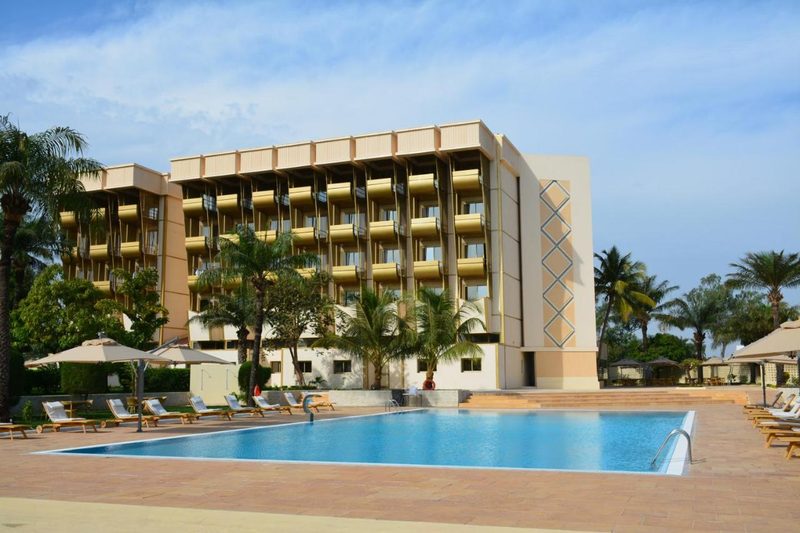
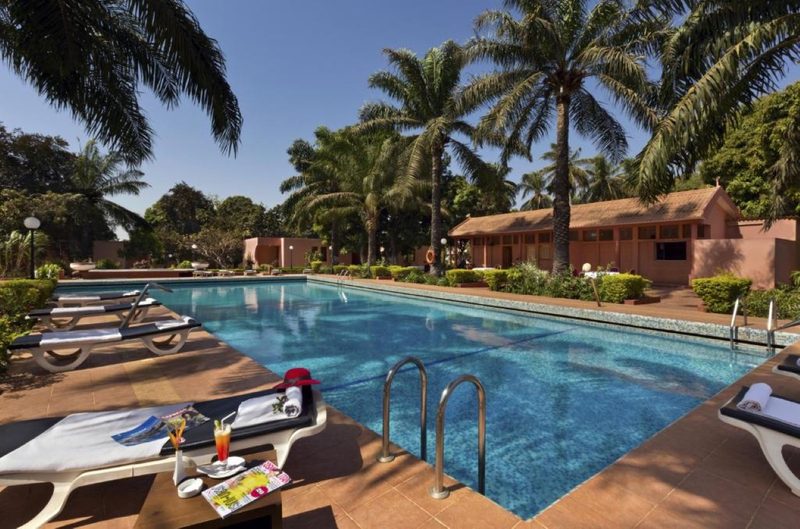
Where to Stay in Guinea-Bissau in March
Hand-picked hotels across price tiers for March travellers.

Public Holidays in March
Dates that affect opening hours, transport and crowds
International Women's Day
Observed nationwide as a public holiday.
Good Friday
Observed nationwide as a public holiday.
Easter Sunday
Observed nationwide as a public holiday.
International Women's Day
Observed nationwide as a public holiday.
Packing Checklist
Bookmark this page — your progress is saved between visits
Need the full list with shopping links?
Climate-specific gear, brand recommendations, and what to leave at home.
View Guinea-Bissau Packing List →Essential Tips
Insider knowledge and common pitfalls to avoid
Insider Knowledge
Learn Guinea-Bissau Crioulo, not Portuguese. Portuguese is official and gets you through bureaucratic encounters. Crioulo is what people speak at the market, on the boats, and in the villages. Learning even a handful of phrases changes interactions completely. Try 'kuma ki bu sta' (how are you) and 'n sta dritu' (I'm fine). People visibly relax when they hear it. The warmth that follows is genuine.
Seek out the cashew fruit, not the nut. It is Guinea-Bissau's March obsession. The yellow and red fruit that grows beneath the cashew nut is juicy, astringent, and slightly tannic. It tastes like a cross between a mango and an unripe pear. Locals eat it raw. They squeeze it for juice that ferments into cashew wine (caju) within hours in the heat. The smell of rotting cashew fruit on the ground is one of the defining scents of the Guinean countryside in late dry season. Try the fresh juice before it ferments. The fermented version is an acquired taste. Most first-timers find it closer to vinegar than wine.
Listen for gumbe, the real rhythm of Bissau. This music blends West African polyrhythm with Portuguese guitar and Cape Verdean morna into something that sounds like nowhere else. In March, the heat pushes social life outdoors after dark. You can hear live gumbe at informal gatherings in the bairros around Bandim and Cupelom. These are not tourist events. Someone has a guitar and a djembe. The neighbors show up. Ask at your guesthouse. If the owner trusts you, they might point you toward one.
Expect travel between the mainland and the Bijagos Islands to be weather-dependent. This is true regardless of what anyone promises you. Even in March, when conditions are generally favorable, departures shift by hours or days. Tides, captain availability, fuel supply, and unexplained factors all play a role. Build at least two buffer days into any itinerary that includes island crossings. Travelers who leave frustrated are almost always the ones who tried to run a tight schedule. Guinea-Bissau does not operate on one.
Avoid These Mistakes
Do not underestimate the logistics chain. Guinea-Bissau is not a country where you land at the airport and start exploring. International flights arrive at Osvaldo Vieira Airport in Bissau, typically via Lisbon or Dakar. Every onward connection, whether to the Bijagos or to mainland towns, requires advance arrangement, local contacts, and a tolerance for plans that change without notice. Travelers who arrive without prearranged transport, accommodation confirmations, and a local point of contact spend their first days solving problems. They do not spend them traveling.
Do not skip yellow fever vaccination. Guinea-Bissau requires proof for entry. Immigration officers at Osvaldo Vieira Airport check the International Certificate of Vaccination. This is not a formality that gets waved through. Travelers without the certificate have been denied entry and put on return flights. Get vaccinated at least ten days before departure. The certificate is not considered valid until then.
Do not treat March's dry heat as comfortable because the humidity is only 43 percent. That reading is deceptive. At 33 degrees C (93 degrees F) and above, even moderate humidity creates significant heat stress. The lack of cloud cover means direct sun exposure is relentless from about 9 AM to 4 PM. Newcomers who schedule full-day outdoor activities without a midday rest, ignoring the local tradition of retreating indoors between noon and 3 PM, end up with heat exhaustion by day three. Respect the siesta.
Ready to plan your trip to Guinea-Bissau?
Now that you've got the research covered, here's where to go next.
Explore More Activities in Guinea-Bissau
Didn't see anything interesting yet?
Browse Viator's full catalog of tours, day trips, food experiences, and private guides in Guinea-Bissau.
See All Guinea-Bissau Tours on Viator