Things to Do in Guinea-Bissau in May
May weather, activities, events & insider tips
Low Season · Budget Friendly
May Weather in Guinea-Bissau
Long-run averages for May in Bissau
91°F (32°C)
High Temp
71°F (22°C)
Low Temp
0.7 inches (18 mm)
Rainfall
63%
Humidity
11
Sunny-Day UV
⚠ Late May can bring the first heavy thunderstorms heralding the wet season, in the south near Cantanhez. These isolated downpours arrive fast. They dump rain for thirty to sixty minutes, and turn unpaved roads to mud. While May's total rainfall measured in Bissau is only 0.7 inches (18 mm), a single storm can deliver most of that in one event. Pack accordingly.
⚠ The combination of 32°C (91°F) heat and 63% humidity creates conditions where heat exhaustion is a real risk for travellers unaccustomed to tropical climates, during midday walking in Bissau's exposed streets. Hydrate aggressively. Schedule outdoor activity for early morning or late afternoon. Avoid the midday sun.
⚠ Malaria transmission is active throughout Guinea-Bissau year-round, and the mosquito population begins increasing in May as standing water appears after early rains. Prophylaxis, repellent, and treated bed nets are not optional. Take this seriously.
Making the most of May in Guinea-Bissau? Browse tours and activities in Guinea-Bissau on GetYourGuide.
Is May Right for You?
Weigh the advantages and considerations before booking
Advantages
- + May catches the final weeks of Guinea-Bissau's dry season before June's heavy rains arrive. Roads to the interior remain passable. Boat routes through the Bijagos Archipelago still run. Morning skies stay mostly clear. Bissau records just 0.7 inches (18 mm) of rain. That figure is negligible. July dumps 18.6 inches (472 mm) on those same streets.
- + The cashew harvest peaks across Guinea-Bissau in May. The entire country shifts its rhythm around this single crop. Roadside stands sell fresh cashew fruit juice. Locals call it caju. They press it from plump yellow and red fruit. The fruit would rot within hours of falling. The taste is sweet and slightly astringent. Fresh caju exists only here. It exists only now. It cannot be bottled. It cannot be shipped.
- + Guinea-Bissau receives fewer international visitors annually than most European cities get in one weekend. In May, you will likely be the only foreign traveler on Bubaque Island. You will likely be alone wandering Bissau Velho's crumbling colonial facades. That solitude brings genuine interactions. Bissau-Guineans engage you as people, not transactions. The Bijagos beaches are yours. Completely yours.
- + Accommodation and local transport hold to annual baseline prices in May. Guinea-Bissau lacks a conventional high season. Bijagos operators are not yet handling wet-season cancellations. Itineraries hold together more reliably than they will from June onward. This is the window.
Considerations
- − Bissau's average high hits 32°C (91°F). Humidity sits at 63%. The combination creates sticky, oppressive midday heat. Walking the capital's unshaded streets from 11am to 3pm is draining. Almost no air conditioning exists outside a handful of international-standard hotels. Power outages are routine. Plan accordingly.
- − Guinea-Bissau's transport infrastructure ranks among West Africa's weakest. No domestic flights exist. Roads outside Bissau are unpaved. They soften in late May as first rains arrive. Reaching the Bijagos requires negotiating boat passages from Bissau or Enxude. Schedules are approximate at best. Build flexibility into every plan.
- − Medical facilities across the country are extremely limited. The nearest reliable hospital is in Dakar, Senegal. That is roughly 450 km (280 miles) north. Travelers need complete evacuation insurance. Standard travel cover is not enough. Carry a personal medical kit. Include antimalarials, oral rehydration salts, and water purification.
Short on time in May? See day trips around Guinea-Bissau on GetYourGuide.
Best Activities in May
Top things to do during your visit
Bijagos Archipelago Island Exploration by Boat
May is arguably the best month for the Bijagos. This archipelago holds roughly 88 islands. It sits 50 km (31 miles) off Guinea-Bissau's coast. The Atlantic is calmer now than it will be once June's wet season swells arrive. Channels between Bubaque, Rubane, and Orango remain navigable. July crossings are miserable with chop. You travel by pirogue. These are long wooden canoes with outboard motors. They serve as the archipelago's only transit. You weave through corridors of red mangrove roots. The water turns the colour of dark tea. The air smells of salt and decomposing leaf litter. For stretches, the only sounds are the motor's drone and the occasional cry of a grey heron lifting from the canopy. Bubaque, the main hub island, has scattered guesthouses. Women sell smoked fish at a small market. The fish is laid on palm fronds. From Bubaque, day trips reach Soga and Rubane beaches. The sand is fine and slightly gold. The water is warm enough to wade into without bracing yourself. The shoreline is empty in every direction. Book through licensed operators at least two weeks ahead. Boats and guides are limited in number. See the booking section below for current options.
Booking Tip: Arrange island transport at least 14 days before arrival. Use an operator based in Bissau. They handle fuel, crew, and permits for Orango Islands National Park. Confirm the boat has life jackets. Confirm it has a working radio. Safety equipment is not standard. Bring enough CFA cash for the entire trip. There are no ATMs on any of the islands.
Cashew Harvest Cultural Immersion
Guinea-Bissau ranks among the world's largest cashew producers. The harvest peaks in May. The entire country reorganises around the crop. Families move to rural tabancas to pick and process. Roads fill with trucks stacked with burlap sacks. The air in villages across Bafata and Oio regions carries a sharp, fermenting sweetness. This comes from cashew fruit piled under trees. Visiting a working cashew farm is tactile. The fruit is soft and almost spongy. It is bright yellow or red. It sits below the nut like a swollen stem. Locals roast nuts over open fires. The shells spit acrid, oily smoke. Stand downwind and it stings your eyes. Fresh-pressed caju juice spoils within hours. It is drunk everywhere. The taste is tart and faintly tannic. It is a world apart from any packaged cashew product. Ask locally in Bafata or Gabu for farm visits. This is not packaged tourism. It is an economic and cultural season you walk into.
Booking Tip: No formal tour infrastructure exists for cashew harvest visits. Arrange a local guide and driver through your accommodation in Bissau or Bafata. Allow at least a full day for road travel each way. The road from Bissau to Bafata spans roughly 150 km (93 miles). It can take three to four hours depending on conditions. Check current road status before departing.
Bissau City Walking and Colonial History
Bissau does not charm. It confronts. The capital's appeal lies in its rawness, the feeling of moving through a place no one has staged for tourists. Begin in Bissau Velho, the old Portuguese quarter near the port. Crumbling pastel buildings in faded pink and ochre line streets so quiet you hear your own footsteps on broken pavement. The Fortaleza de Sao Jose da Amura, built in 1753, looms above the waterfront. Its walls have survived centuries. Access is often restricted. The military still occupies the compound. Walk to the Pidjiguiti dock. Portuguese colonial forces killed striking dockworkers here in 1959. A clenched-fist monument marks the spot. It draws crowds on public holidays. Continue to Bandim Market, the city's true nerve centre. This open-air sprawl covers enormous ground. Vendors sell dried fish. The salt-and-smoke smell hits you from twenty metres away. Hand-dyed panos cloth in geometric indigo patterns hang nearby. Traditional healers sort medicinal herbs in stalls their families have held for decades. Arrive early. The heat peaks fast.
Booking Tip: Hire a local guide who speaks Kriol and Portuguese. Architecture alone cannot explain this city. Start walks by 7am. The worst heat arrives later. Carry water. Sun protection is essential. Shade is scarce outside the market. Check current guided options in the booking section below.
Mangrove and Wetland Birdwatching
Guinea-Bissau's coastline holds some of West Africa's most extensive mangrove systems. May sits at the dry season's tail. Birdlife concentrates around shrinking freshwater sources. Sightings run denser now than during flooded months. The Cantanhez Forest in the south and the mangrove channels around Catio and the Rio Cacheu host western reef herons, pink-backed pelicans, and Caspian terns. Colonies of nesting egrets turn individual trees white with their numbers. The dawn chorus begins before 6am. It builds a layered wall of sound. Stay still long enough and you can pick out individual calls. The mangrove air hangs thick and humid. It carries the mineral smell of exposed mudflats at low tide. Water beneath the prop roots stays so still it mirrors the canopy above. May's lower water levels narrow the channels. Your pirogue drifts closer to roosting birds than the rains will ever allow. The Cantanhez area also shelters Guinea-Bissau's remaining western chimpanzees. Sightings demand patience. A knowledgeable local tracker helps.
Booking Tip: Mangrove birdwatching requires a local guide with a pirogue. Arrange this through contacts in Bissau or Catio. Plan full-day outings. Bring binoculars. Pack insect repellent effective against mangrove mosquitoes. Waterproof bags protect camera gear. The best photography light comes in the first two hours after sunrise. Check the booking widget below for nature tour options.
Orango Islands National Park Wildlife Excursion
Orango Grande, largest island in the southern Bijagos, hosts one of the world's only saltwater hippopotamus populations. These hippos move between inland lagoons and the Atlantic shore. Almost nowhere else on earth shows this behaviour. May nears the dry season's end. Hippo sightings prove more reliable from October to December, the post-rain period when animals return to Anor Lagoon. Yet a multi-day May stay on Orango still offers chances. Check the tidal mangrove channels at dawn. The hippos feed then. Beyond hippos, the island's beaches and waters shelter West African manatees. The mangrove fringe teems with birds. The island carries sparse human settlement. Bijago communities here maintain animist traditions. Sacred forest groves exist. Outsiders must not enter. Night falls totally silent. Surf breaks the darkness. Occasionally, a low grunt rises. A hippo moves through shallow water somewhere nearby.
Booking Tip: Orango demands a boat journey of several hours from Bubaque. National park visits require a permit. Arrange this in advance through the park authority in Bissau or a licensed operator. Stay at least two nights. Realistic wildlife encounters need time. Pack all supplies. Bring food, water, and a headlamp. No commercial infrastructure exists. See the booking section below for guided wildlife excursions.
Traditional Cuisine and Market Food Tasting in Bissau
Guinea-Bissau's cooking rests on West African foundations. Four centuries of Portuguese colonial influence shaped it. The coastline delivers abundant fish and shellfish. In May, the cashew harvest adds seasonal depth. Ground cashew nuts thicken stews. Fresh caju juice appears at every roadside stand. Roasted nuts sell warm in paper twists at Bandim Market. Their sweetness and oil vanish once exported and dried. Seek out caldo de mancarra. This thick peanut-based stew builds on slow-cooked tomato and onion with chicken or fish. It arrives ladled over rice. The peanut aroma drifts from small cook-shops along Avenida Amilcar Cabral before you spot the pot. The texture runs rich and slightly gritty from hand-pounded groundnuts. Cafriela de frango demands equal attention. Chicken marinates in a paste of lemon, garlic, and piri-piri chilli. Grilling happens over charcoal until the skin chars and crackles. The piri-piri heat builds slowly. Charcoal smoke clings to the meat. No oven achieves this. Eat at cook-shops around Bandim and the port area. Women serve both dishes from blackened aluminium pots set over wood fires.
Booking Tip: No formal food tours exist in Guinea-Bissau. Navigate the Bandim Market and surrounding cook-shops with a local guide who can translate Kriol and help identify dishes. Eat where locals eat. High turnover means fresher food. Carry hand sanitiser and stick to thoroughly cooked dishes served hot. The best eating window is lunchtime, between noon and 2pm, when the cook-shops are at peak production.
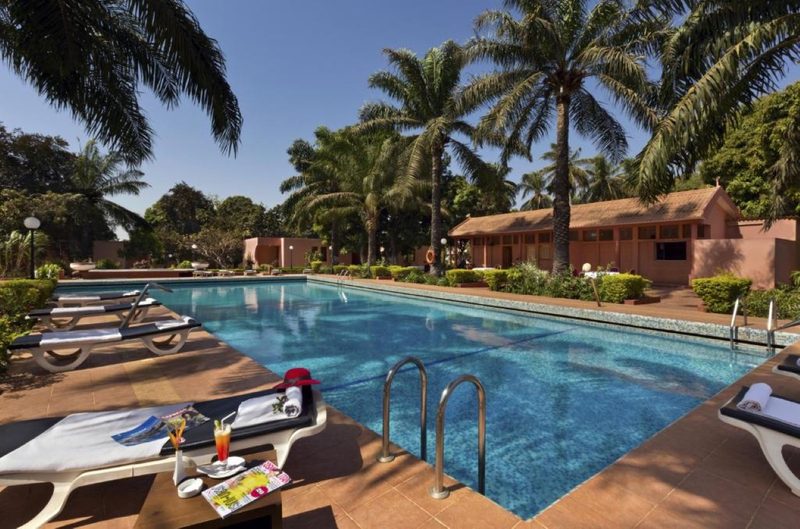
Where to Stay in Guinea-Bissau in May
Hand-picked hotels across price tiers for May travellers.

Public Holidays in May
Dates that affect opening hours, transport and crowds
International Workers' Day
Known in English as Labour Day. Observed nationwide as a public holiday.
International Workers' Day
Known in English as Labour Day. Observed nationwide as a public holiday.
Packing Checklist
Bookmark this page — your progress is saved between visits
Need the full list with shopping links?
Climate-specific gear, brand recommendations, and what to leave at home.
View Guinea-Bissau Packing List →Essential Tips
Insider knowledge and common pitfalls to avoid
Insider Knowledge
The cashew fruit juice sold from roadside stands in May is something you cannot get at any other time of year and cannot find outside Guinea-Bissau. The fruit spoils within hours of falling, so the juice is pressed and drunk on the spot, tart and cool if kept in the shade. Ask for caju natural, meaning without added sugar, which is how most Bissau-Guineans prefer it. The taste is nothing like the cashew nut. It is closer to a slightly astringent, aromatic mango.
Guinea-Bissau runs on Kriol, not Portuguese, for daily life. Learning even five phrases in Kriol, such as kuma ku bo sta (how are you), will change your interactions completely. Portuguese works for official business and with educated professionals. But at Bandim Market, on the boats, and in any tabanca, Kriol is the language that gets you a real answer instead of a polite nod.
The boat schedule from Bissau to Bubaque is not published in any reliable form. Ask at the port in Bissau the day before you want to travel, confirm the departure time, and then arrive an hour early anyway. Boats leave when full, not when scheduled, and if you miss the morning departure there may not be another until the next day. Late May brings the first swells of the season, and crossings are occasionally cancelled without notice.
Electricity in Bissau is supplied by generators, not a grid, and outages of several hours are normal even in the capital. Charge every device whenever power is available, carry a portable battery pack, and do not assume your accommodation's generator runs through the night. On the Bijagos, assume no electricity at all unless your accommodation specifically advertises solar panels or a private generator.
Avoid These Mistakes
Arriving without enough CFA cash for the entire trip is a common error. Travelers assume they can withdraw money in Bissau or use cards, and then find that ATMs are unreliable, banks keep limited hours, and no business outside the capital accepts anything but cash. Exchange currency in Dakar before flying in, or bring euros to exchange at banks in Bissau during weekday mornings only.
Underestimating travel times between destinations is easy. Guinea-Bissau is a small country, roughly 36,125 sq km (13,948 sq miles), but unpaved roads, no domestic flights, and boat-dependent island access mean that a journey of 150 km (93 miles) can take an entire day. Build buffer days into any itinerary, if you plan to reach the Bijagos and return to Bissau for your outbound flight.
Skipping antimalarial medication because the trip is short is dangerous. Guinea-Bissau has year-round malaria transmission, and the risk does not diminish just because you are staying in Bissau or visiting for only a few days. The mangrove and waterside environments of the Bijagos are high-risk zones. Consult a travel medicine clinic at least four weeks before departure to start prophylaxis on time.
Ready to plan your trip to Guinea-Bissau?
Now that you've got the research covered, here's where to go next.
Explore More Activities in Guinea-Bissau
Didn't see anything interesting yet?
Browse Viator's full catalog of tours, day trips, food experiences, and private guides in Guinea-Bissau.
See All Guinea-Bissau Tours on Viator